
A Madonna Album for the Ages
By Eric Grigs | July 5, 2026
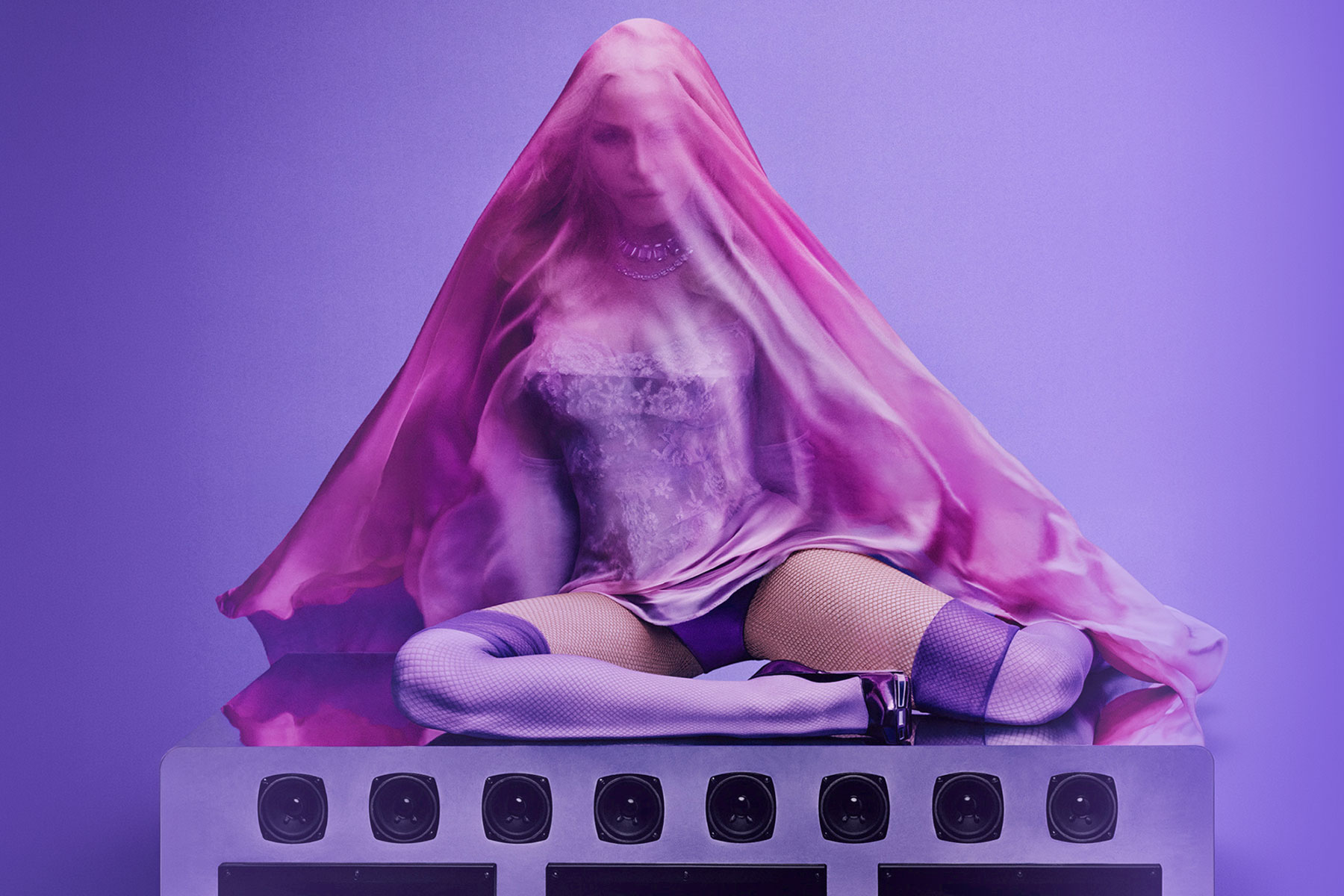
Cover art for Madonna's album Confessions II. Photograph: Rafael Pavarotti.
When Chris Richards reviewed Madonna’s Rebel Heart for The Washington Post more than a decade ago, it began: “A new Madonna album, a fresh reminder we’re all going to die.” It’s a cheeky line that I think about every time she drops new music. So with the arrival of 16 new tracks, it’s time to look in the mirror, and confess again the pleasure and pain of our own mortality.
At every milestone of my life, Madonna’s music was there providing the soundtrack. Growing up in a small town, and being raised in a religious household, her blending of the sacred and profane was a siren’s call for me and many GenXers alike. Madonna’s endless reinventions provided a roadmap for how to successfully navigate identity struggles and survive as an outsider. Her unapologetic attitude gave a generation of gay men permission to live authentically.
When I was younger, I frequented dance clubs every possible weekend. As I entered my thirties, I would joke with my circle of friends that I feared becoming “the old man in the club.” A silly fear then, with my full head of overly gelled hair and wearing the latest Converse sneakers. Now it’s a reality, with graying, thinning hair and the gel has relocated to the inserts of my not-at-all stylish walking shoes. (Like most people my age, my back is sadly no longer built for standing for hours on concrete floors at general admission shows.)
Time goes by so slowly, except when it doesn’t.
It’s a weird feeling to grow old along with the Queen of Pop, someone who once fiercely defined youth culture in the 1980s. I’ve mostly come to terms with the aging happening to me, but why’s it so hard to permit our idol the same grace? Now in my fifties, these are the emotions bubbling up bittersweetly as I listen to Madonna’s latest music, bracing for one more of life’s letdowns. But to my delight, I can report that it’s an absolute banger. Immediately, as she proclaims at the outset, I feel so free.
Madonna’s fifteenth studio album, Confessions II, a follow up to 2005’s Confessions on a Dance Floor, has been greeted with some of the best accolades of her long career. Sequels rarely live up to the hype. It takes nerve to attempt topping the success of a global smash and one of her most revered albums, perhaps the last high peak of her icon status.
Still, the audacity of releasing a dance album at 67 shouldn’t really be all that shocking from the woman who put out a book of nude photos of herself at the height of her fame. The same someone who continually risked that fame to stand with a community being ostracized and decimated from the plague of AIDS when it was an almost certain death sentence. She’s always been fearless.
And yet, people fall over themselves to shout online about what she should or shouldn’t be doing at her age. All caps opinions on what they deem is appropriate. Calling her grandma in the comments. Dragging her for plastic surgery. She clapped back by saying, “the most controversial thing I have ever done is to stick around.”
Not surprisingly, for anyone who stays in it for the long haul, there are bound to be some bruises along the way. A disappointing three album run at Interscope and massive touring deal with Live Nation seemed overly calculated and didn’t generate much chart interest for a music legend of her caliber. Sure there were some stellar, deserving tracks (“Living for Love”) but they were buried in a sea of unevenness and unfocus. With every release after the first Confessions, broad consensus was that the Queen who had always been on top, the one defining trends, was now the one chasing them. Until now. Her homecoming to Warner Records has infused her work with relevance again.
With Madonna we’re used to talking about everything but the music itself. So let’s talk music.
Ironically, a dance album should be a safe bet. At this stage of her career, you might expect it to be mindless fun, four-on-the-floor beats that check the right boxes and pander to her core fanbase. Instead, the non-stop mix she and main collaborator Stuart Price have crafted is a breathless journey through a night out — from your first step into the club (“I Feel So Free”) to the late night, sweat-drenched frenzy on the dance floor (“Everything”) to the quiet morning afterglow (“L.E.S. Girl”).
In spoken interludes, Madonna signals the significance of dance music as a threshold for expanded consciousness. Spiritual Madonna from both Ray of Light and Like a Prayer is back in the house. But this sequel is not just a continuation, it’s a cross-generational conversation woven from her past music. There would be no “Danceteria” without its tether to Madonna’s first single “Everybody” and the story of how she was forged and found among a community of creatives at the legendary club. “Good for the Soul” is an astrological sister to Ray of Light. “One Step Away” mirrors messages of liberation found in American Life. “School” is cut from Erotica’s cloth.
Confessions II is the Rosetta Stone that unlocks her legacy and builds on it, instead of just sampling and referencing it as she’s done in the past to mixed results. (The callback in “Deeper and Deeper” to “Vogue,” good. The laundry list of song titles as lyrical history in “Veni Vidi Vici,” not so much.) “The Test,” a duet with daughter Lola Leon, rewards long-time listeners by allowing them to hear the perspective of Ray of Light’s “Little Star,” a grown adult now. The track adds richness to the story Madonna began in the ’90s about fame’s “Substitute for Love” and its impacts on her family.
The album is packed with similar introspective snippets, from her tumultuous marriage with first husband Sean Penn, estrangement and deathbed reconciliation with brother Christopher, and conflicted relationship with her stepmother. It would be impossible for a younger artist without as deep of life experience, and back catalog, to produce an album like this.
If my baby’s got a secret, it’s probably this: age does have its advantages. Every scar, trauma, loss, and love, Madonna has clearly earned. Years and years of being lifted up and torn down over and over, but always rebuilding self.
Who would have predicted that of all the ’80s music greats — Michael, Prince, George, Whitney — Madonna would be the one who outlived them? After a recent serious hospitalization, she has been graced by God with more time, and much of the urgency of Confessions II is owed to Madonna’s incomparable work ethic on overdrive with the awareness that time is fleeting.
In the end, that’s the ultimate triumph of Confessions II. Acknowledging that our lives go by far too quickly, and like it or not, nobody has the power to change it. “Time is a river that we cannot unwind,” Madonna sings in “Good for the Soul.” We can be terrified of our own mortality and paralyzed by it. Or we can dance. We can move together to the pulsing beat and bask in the flashing lights while it lasts. What other choice is there?
Eric Grigs is a pop culture writer and co-host of the Pop Trash Podcast.